


What Is a Round Robin Bet: A Simple Guide to Understanding How It Works


Sports betting has a language of its own, and the round robin bet is one of its more intriguing terms. It sounds complicated at first, but once the structure clicks, it becomes a useful way to balance risk and reward instead of relying on one big parlay. This guide breaks down what a round robin bet is, how it works, and why bettors use it.

Understanding Round Robin Bets: What Are They?
A round robin bet meaning comes down to combining several smaller parlays instead of placing everything on one big one. Rather than betting a single three-team parlay, a bettor picks three teams and creates multiple smaller parlays covering different combinations of those teams. If one selection lets the bettor down, the other combinations can still pay out. That's what makes round robin betting appealing to parlay fans who want a bit more safety built into the slip: it spreads a set of picks into several smaller wagers instead of one all-or-nothing bet.
The idea scales beyond three selections too. Adding a fourth or fifth pick multiplies the number of possible combinations fast, since every additional team creates new doubles, trebles, and sometimes larger parlays to track. That growth is part of the appeal for bettors who like building bigger slips, but it also means the math gets harder to do by hand, which is exactly why so many rely on a round robin bet calculator once they move past three or four selections.
How Round Robin Betting Works: A Clear Guide
A round robin bet is built from a few standard components. Doubles are two-team parlays covering every possible pair from the selections; picking three teams (A, B, C) produces three doubles: A+B, A+C, and B+C. A treble combines all the picks into one parlay, so the same three teams would also form A+B+C. A more advanced feature, up-and-down single stakes, lets winnings from one leg roll over into another bet, giving extra chances to profit from a hot run. The tradeoff for this flexibility is a bigger total stake, since a bettor is funding several parlays at once - which is why many turn to a round robin calculator to work out the exact cost and potential return before placing anything.
Round Robin Bets: Benefits and Drawbacks You Should Know
Like any betting system, round robins come with real upsides and real costs. On the plus side, they act as a safety net since even a losing selection still leaves other winning combinations in play, they offer flexibility to mix bet types, and they carry more win potential than single bets while staying less risky than one large parlay. On the downside, the higher stakes mean placing multiple bets requires a bigger bankroll, the payout on any individual combination is lower than one parlay with the same picks, and the math behind returns can be genuinely confusing for beginners. That tradeoff is exactly why so many bettors look up a round robin explained guide or a worked example before trying it for the first time.
How to Calculate Round Robin Bets: Easy Steps
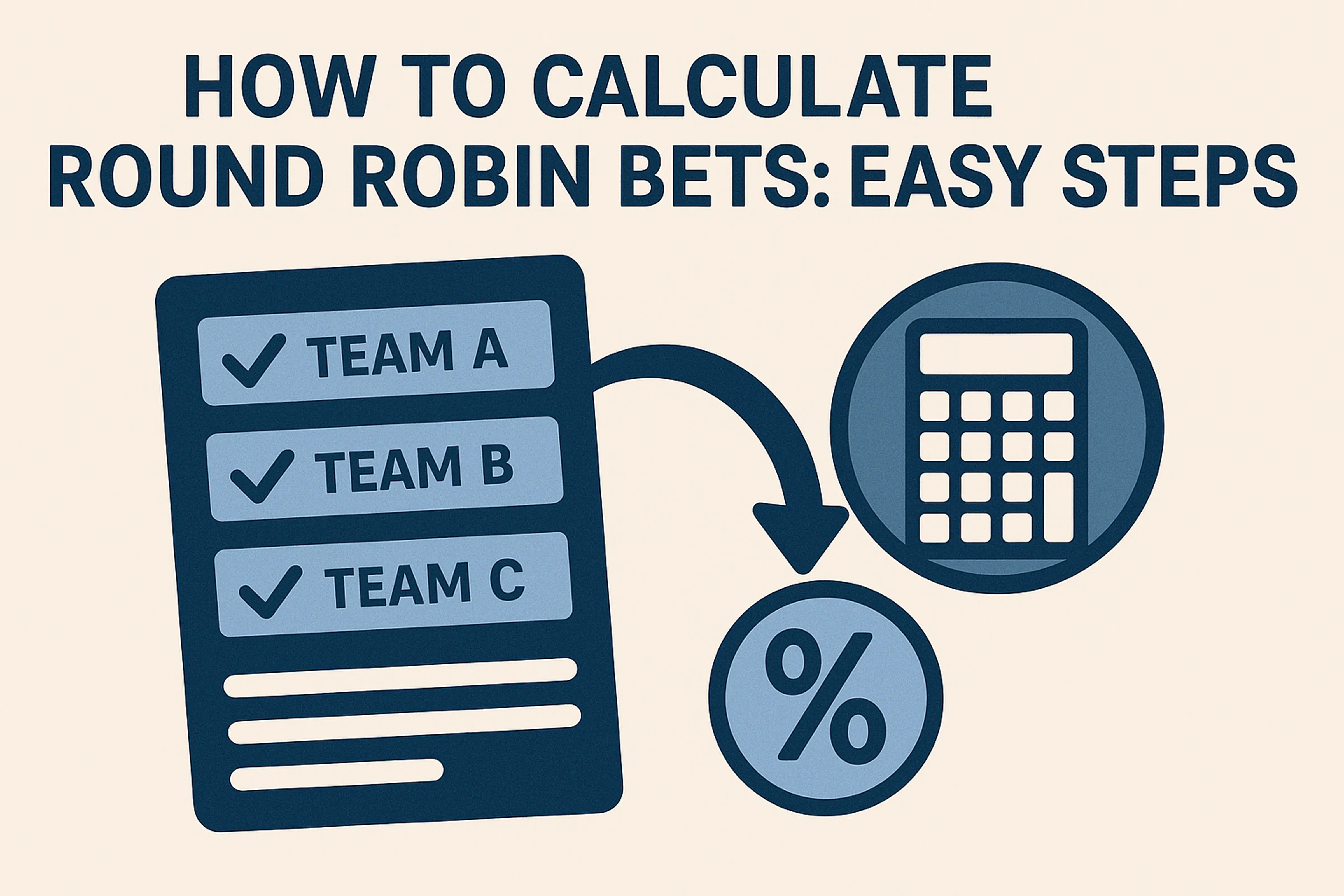
Calculating a round robin bet is manageable once broken into steps, even without relying on a calculator.
- Choose the selections - for example, three teams: A, B, and C.
- Break them into combos: doubles A+B, A+C, B+C, plus the treble A+B+C.
- Decide the stake per combo. At 10 per parlay across 3 doubles and 1 treble, that's 4 bets and a 40 total stake.
- Calculate potential payouts by working out each parlay's odds separately, then adding the results together.
- Factor in partial wins: if one team loses, the doubles that don't include it still pay out, which is the core advantage of the system.
Many sportsbooks build a round robin parlay calculator into their platform specifically to skip this manual math. It's worth running a few different examples through a calculator before betting real money, just to see how changing the stake per combo or adding a fourth selection shifts both the total cost and the potential payout - the relationship between the two isn't always intuitive at first glance.
Responsible Gambling: Why It Matters
Because a round robin places several bets at once, the total stake can climb quickly, especially when chasing bigger wins after an early loss. Bankroll management matters here more than in a single bet: set clear limits, stick to them, and remember that no strategy, however well built, guarantees a result. It also helps to decide the total stake for the whole round robin before picking teams, rather than picking teams first and working out the cost afterward, since that order tends to lead to bigger bets than originally planned.
A round robin bet offers a real balance between the excitement of a parlay and the safety of spreading outcomes across smaller wagers, but it works best when played with a plan rather than on impulse. Before building a slip, it's worth studying a round robin bet example or two and testing a calculator to see how the numbers actually move, so the first real-money round robin isn't also the first time seeing how the payouts behave.
FAQ
At least 3 teams or selections. With 3 teams, that produces 3 doubles plus 1 treble, or 4 separate parlays.
Yes. If one selection loses, the smaller parlays that don't include that team still pay out, so the other doubles can still win.
Yes. It costs more because multiple parlays are placed at once, for example $10 per combo multiplied by the number of combos, but it offers better coverage and lower risk than one large parlay.
The payout depends on how many of the individual combinations win, not just the overall outcome, so a partial win on some combos while others lose is a normal, expected result.
Not exactly. A parlay is one combined bet on all selections at once, while a round robin splits those same selections into several smaller parlays, trading a bit of payout size for more ways to still win.
Sergey Ilyin
An experienced specialist in the field of betting and gambling. He analyzes market trends, player behavior, and the dynamics of online gaming platform development. An expert in the intricacies of sports betting and knowledgeable about the regulatory framework of the gambling industry.